Soakaways
Soakaway Installation and Repair
We are experts at installing soakaways to manage rainwater runoff from driveways, patios, and roof gutters for homes and businesses across the South of England and the Midlands.
What is a Soakaway?
A soakaway is essentially a large, underground pit—usually filled with gravel, rubble, or specially designed drainage crates—that collects rainwater runoff from roofs, driveways, patios, and other hard surfaces. As the soakaway fills with water during rainfall, it slowly allows the water to seep into the surrounding soil and down into the natural water table. This controlled dispersal helps manage excess rainwater effectively and sustainably.
Soakaways are used to temporarily store and gradually release rainwater that would otherwise contribute to surface flooding, standing water, or place excess pressure on local sewage systems. By diverting runoff into a soakaway, homeowners can reduce the risk of damp, erosion, or overflow issues, particularly during periods of heavy or prolonged rainfall. Soakaways are a key part of sustainable drainage solutions (SuDS), helping properties stay dry while supporting the natural water cycle.
Request a free quote
We offer a professional and cost-effective soakaway installation service across the South of England and the Midlands, providing reliable drainage solutions without the expensive bill.
Our experienced team designs and installs soakaways tailored to your property’s needs, helping manage rainwater runoff efficiently and prevent waterlogging, flooding, or damp issues.
- 0800 2461701
Understand the regulations
Prior to starting work on a soakaway will need to check the requirements of Local Building Regulations.
Building Regulations require you to make adequate provision to dispose of surface water (also called storm-water, rainwater, or runoff) from your home or commercial building. You are not allowed to feed this surface water into storm drains. It requires surface water to be collected and treated where it falls (and even reused if possible). A soakaway helps you achieve this requirement and the added advantage of being a low environmental–impact solution to this problem.
Soakaway Maintenance and repair
The first sign that you have a problem with your soakaway is water pooling on the surface and gradually building up. Leaves, twigs, silt, grit and litter can accumulate and block the pipes, or prevent the water from draining efficiently. We have a lot of experience in unblocking and repairing soakaways that aren’t functioning properly.
To avoid problems, it is best to regularly clean the soakaway. We use a high pressure water jet to check the flow through the pipes that feed in to the soakaway. The high pressure jet can blast away any debris that is blocking a pipe, and get rid of silt build up. In most cases, this procedure resolves the problem.
However, clogging in a soakaway may become a recurrent problem, and in that case it we recommend excavating the soakaway and create a fresh soakaway bed. When this happens, some owners take the opportunity to fill in the existing soakaway and excavate a new one, that is in line with current regulations.
Soakways
Frequently asked questions
Prior to installing a soakaway it is vital that a percolation test is carried out at your property. A percolation test is crucial in assessing the suitability of the ground conditions, and the required size of the soakaway. It is pointless sinking a soakaway in clay, as this will simply fill up with water.
Most Local Authority Regulations will stipulate that Soakaways must be at least 5 metres from any building.
It is best to locate it on the lowest part of your land or garden, as this will mean less digging down. You should also try to keep the pipe length to a minimum and as straight as possible to reduce the likelihood of the pipe getting blocked.
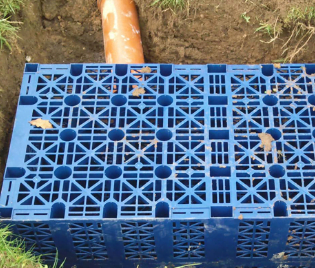
These create an underground storage area that can hold excess water and prevent it flooding your property, garden or land. The crates are made of plastic, with a latticework construction to allow the water to pass through in a controlled way to the soakaway.
We will excavate the site, and bury the crate underground, then dig drains or channels which deliver excess water into the crate. An average storm crate can hold about 300 litres of water. We can discuss with you, whether this is a suitable solution for your property, and carry out any necessary installation work.
The pipe taking the surface water into soakaways should be at least 75mm diameter (the minimum pipe size for any surface water drainage). However 100mm is the recommended size as this makes the drain more effective.

Want to know more about soakaways?
Would you like more information about the installation of a soakaway? Get in touch with our team of drain specialists today to find out more. We look forward to chatting with you and helping you with your soakaway requirements.
Recent Soakaway Feedback
expert Drain Repairs in the midlands and south of england
Our specialist drain repair team cover the Midlands, Surrey, Hampshire, West Sussex and Berkshire. No matter where you are we will be happy to give you any drainage advice free of charge over the phone.
If you would like to discuss your drain problem with one of our experienced drainage engineers: